
Dr.-Ing. Nicole Vorhauer-Huget
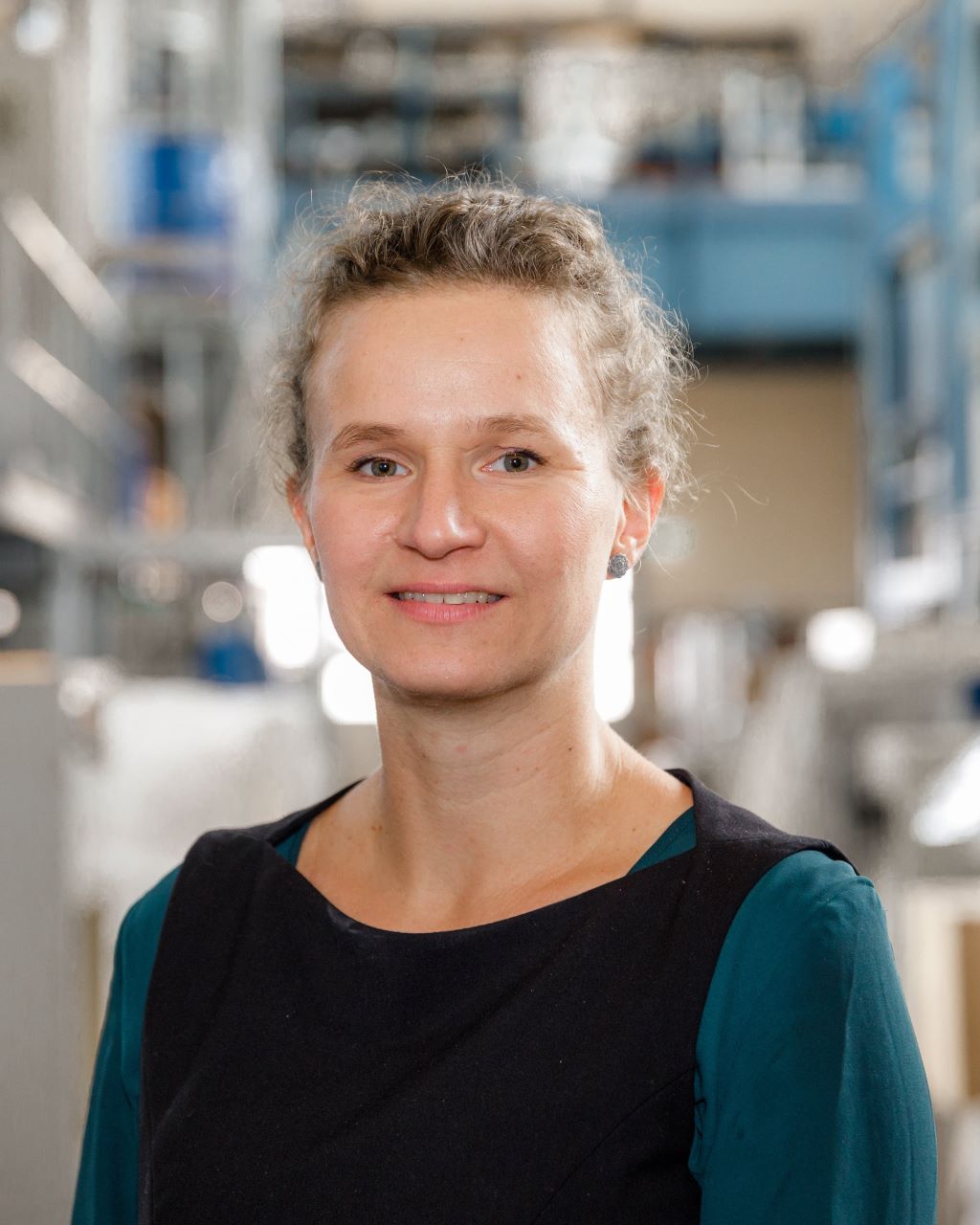
Dr.-Ing. Nicole Vorhauer-Huget
Chair of Thermal Process Engineering
Experience
| since 09/2018 |
Research Group Leader Transport in Porous Media |
|---|---|
| since 2007 |
Seminar leader & lecturer Teaching activities (lectures, seminars, laboratory work) in German and English in the areas of
|
| since 2007 |
Committees
|
| since 2012 |
Events Ladies Night for Women in Engineering
|
Education
| 09/2018 |
Dr.-Ing. (Cotutelle de Thèse) Doctoral thesis: Experiment based development of a non-isothermal pore network model with secondary capillary invasion. https://doi.org/10.25673/13461 |
|---|---|
| 2002 – 2007 |
Dipl.-Ing. Verfahrenstechnik |
Peer-reviewed journal articles
| [47] | Faber, F., Dernbecher, A., Gruber, S., Foerst, P., Dieguez-Alonso, A., & Vorhauer-Huget, N. (2026). Anisotropic Gas Permeability of Beech Wood from X-ray Microtomography and Pore Network Modeling: The Role of Vessels, Fibers, and Pyrolytic Conversion. Energy & Fuels, 40(39), 21866 – 21881. https://doi.org/10.1021/acs.energyfuels.6c03101 |
| [46] | Vorhauer-Huget, N., Ghasemi Monfared, Z., Kazemi, N., Arango Durango, E., Tsotsas, E., & Umeki, K. (2026). Effective thermal conductivity of packed bed of porous biochar particles. Particuology, 116, 437 – 447. https://doi.org/10.1016/j.partic.2026.06.036 |
| [45] | Zhan, N., Liu, E., Dernbecher, A., Vorhauer-Huget, N., Wu, R., Dieguez-Alonso, A., & Kharaghani, A. (2026). Detailed characterization of pore structure and transport properties of biomass particles during pyrolysis. Particuology. https://doi.org/10.1016/j.partic.2026.08.001 |
| [44] | Ferreira, D.B., Messias, A.P., Dos Santos, D.A., Vorhauer-Huget, N., Tsotsas, E., & Thoméo, J.C. (2026). Characterization of Metarhizium anisopliae spore extraction in a rotary drum using DEM method. Particuology, 109, 59 – 74. https://doi.org/10.1016/j.partic.2025.12.005 |
| [43] | Aamer, E., Faber, F., Bhaskaran, S., Dürr, R., Bettenbrock, K., Kienle, A., & Vorhauer-Huget, N. (2026). Pore Network Model for Study of Biofilm Growth Limitations in Porous Substrata. Transport in Porous Media, 153(1), 12. https://doi.org/10.1007/s11242-025-02261-6 |
| [42] | Faber, F., Gruber, S., Foerst, P., Tsotsas, E., & Vorhauer-Huget, N. (2026). Assessment of non-isothermal pore network modeling of freeze-drying using 4D X-ray imaging. Chemical Engineering Journal, 172870. https://doi.org/10.1016/j.cej.2026.172870 |
| [41] | Idakiev, H., Aleksandrova, D., Boye, G., Foerst, P., & Vorhauer-Huget, N. (2026). Impact of drying techniques on protein denaturation in Tenebrio molitor: A thermal analysis via differential scanning calorimetry. Bulgarian Chemical Communications, 58(1), 30 – 36. https://doi.org/10.34049/bcc.58.1.5703 |
| [40] | Ferreira, D., Cunha, L., Vorhauer-Huget, N., Tsotsas, E., & Thoméo, J. (2025). Extraction of spores of Metarhizium anisopliae in a rotary drum. Chemical Engineering and Processing - Process Intensification, 216, 110430. https://doi.org/10.1016/j.cep.2025.110430 |
| [39] | Altaf, H., Miličic, T., Faber, F., Vidaković-Koch, T., Tsotsas, E., & Vorhauer-Huget, N. (2025). Use of Reconstructed Pore Networks for Determination of Effective Transport Parameters of Commercial Ti-Felt PTLs. Processes, 13(4), 943. https://doi.org/10.3390/pr13040943 |
| [38] | Dernbecher, A., Bhaskaran, S., Vorhauer-Huget, N., Seidenbecher, J., Gopalkrishna, S., Briest, L., & Dieguez-Alonso, A. (2025). Investigation on the intra-particle anisotropic transport properties of a beech wood particle during pyrolysis. Particuology, 98, 172 – 190. https://doi.org/10.1016/j.partic.2025.01.006 |
| [37] | Faber, F., Vorhauer-Huget, N., Thomik, M., Gruber, S., Först, P., & Tsotsas, E. (2025). Pore-scale study of coupled heat and mass transfer during primary freeze-drying using an irregular pore network model. Drying Technology, 43(1-2), 162 – 182. https://doi.org/10.1080/07373937.2024.2407062 |
| [36] | Sourya, D.P., Gurugubelli, P.S., Bhaskaran, S., Vorhauer-Huget, N., Tsotsas, E., & Surasani, V.K. (2024). A comparative study on the Lattice Boltzmann Method and the VoF-Continuum method for oxygen transport in the anodic porous transport layer of an electrolyzer. International Journal of Hydrogen Energy, 92, 1091 – 1098. https://doi.org/10.1016/j.ijhydene.2024.10.340 |
| [35] | Gruber, S., Greiner, J., Eppink, A., Thomik, M., Coppens, F., Vorhauer-Huget, N., Tsotsas, E., & Foerst, P. (2024). Pore shape matters – In-situ investigation of freeze-drying kinetics by 4D XCT methods. Food Research International, 193, 114837. https://doi.org/10.1016/j.foodres.2024.114837 |
| [34] | Bhaskaran, S., Miličić, T., Vidaković-Koch, T., Kumar Surasani, V., Tsotsas, E., & Vorhauer-Huget, N. (2024). Model PEM water electrolyzer cell for studies of periodically alternating drainage/imbibition cycles. International Journal of Hydrogen Energy, 77, 1432 – 1442. https://doi.org/10.1016/j.ijhydene.2024.06.268 |
| [33] | Vorhauer-Huget, N., Seidenbecher, J., Bhaskaran, S., Schenkel, F., Briest, L., Gopalkrishna, S., Barowski, J., Dernbecher, A., Hilfert, L., Rolfes, I., & Dieguez-Alonso, A. (2024). Dielectric and physico-chemical behavior of single thermally thick wood blocks under microwave assisted pyrolysis. Particuology, 86, 291 – 303. https://doi.org/10.1016/j.partic.2023.07.004 |
| [32] | Xuan, G., Ebert, M., Rodrigues, S.J., Vorhauer-Huget, N., Lessig, C., & Fond, B. (2024). Multi-point temperature measurements in packed beds using phosphor thermometry and ray tracing simulations. Particuology, 85, 77 – 88. https://doi.org/10.1016/j.partic.2023.03.015 |
| [31] | Rodrigues, S.J., Vorhauer-Huget, N., & Tsotsas, E. (2023). Prediction of effective thermal conductivity of packed beds of polyhedral particles. Powder Technology, 430, 118997. https://doi.org/10.1016/j.powtec.2023.118997 |
| [30] | Thomik, M., Faber, F., Gruber, S., Foerst, P., Tsotsas, E., & Vorhauer-Huget, N. (2023). A Non-Isothermal Pore Network Model of Primary Freeze Drying. Pharmaceutics, 15(8), 2131. https://doi.org/10.3390/pharmaceutics15082131 |
| [29] | Altaf, H., Milicic, T., Vidakovic-Koch, T., Tsotsas, E., Tengattini, A., Kardjilov, N., Arlt, T., Manke, I., & Vorhauer-Huget, N. (2023). Neutron Imaging Experiments to Study Mass Transport in Commercial Titanium Felt Porous Transport Layers. Journal of The Electrochemical Society, 170(6), 064507. https://doi.org/10.1149/1945-7111/acd7a8 |
| [28] | Rodrigues, S.J., Vorhauer-Huget, N., Richter, T., & Tsotsas, E. (2023). Influence of Particle Shape on Tortuosity of Non-Spherical Particle Packed Beds. Processes, 11(1), 3. https://doi.org/10.3390/pr11010003 |
| [27] | Miličić, T., Altaf, H., Vorhauer-Huget, N., Živković, L.A., Tsotsas, E., & Vidaković-Koch, T. (2022). Modeling and Analysis of Mass Transport Losses of Proton Exchange Membrane Water Electrolyzer. Processes, 10(11), 2417. https://doi.org/10.3390/pr10112417 |
| [26] | Gruber, S., Thomik, M., Vorhauer-Huget, N., Hans, L., Tsotsas, E., & Foerst, P. (2022). The Influence of Local Microstructure Inhomogeneities on Local Drying Kinetics during Freeze-Drying. Pharmaceutics, 14(10), 2132. https://doi.org/10.3390/pharmaceutics14102132 |
| [25] | Rodrigues, S.J., Vorhauer-Huget, N., & Tsotsas, E. (2022). Effective thermal conductivity of packed beds made of cubical particles. International Journal of Heat and Mass Transfer, 194, 122994. https://doi.org/10.1016/j.ijheatmasstransfer.2022.122994 |
| [24] | Bhaskaran, S., Pandey, D., Surasani, V.K., Tsotsas, E., Vidakovic-Koch, T., & Vorhauer-Huget, N. (2022). LBM studies at pore scale for graded anodic porous transport layer (PTL) of PEM water electrolyzer. International Journal of Hydrogen Energy, 47(74), 31551 – 31565. https://doi.org/10.1016/j.ijhydene.2022.07.079 |
| [23] | Thomik, M., Gruber, S., Kaestner, A., Foerst, P., Tsotsas, E., & Vorhauer-Huget, N. (2022). Experimental Study of the Impact of Pore Structure on Drying Kinetics and Sublimation Front Patterns. Pharmaceutics, 14(8), 1538. https://doi.org/10.3390/pharmaceutics14081538 |
| [22] | Briest, L., Wagner, R., Tretau, A., Tsotsas, E., & Vorhauer-Huget, N. (2022). Microwave-assisted drying of clay roof tiles. Drying Technology, 40(9), 1804–1818. https://doi.org/10.1080/07373937.2021.1878369 |
| [21] | Thomik, M., Gruber, S., Foerst, P., Tsotsas, E., & Vorhauer-Huget, N. (2022). Determination of 3D pore network structure of freeze-dried maltodextrin. Drying Technology, 40(4), 748 – 766. https://doi.org/10.1080/07373937.2021.1966030 |
| [20] | Vorhauer-Huget, N., & Shokri, N. (2022). 30 Years of pore network modeling in drying. Drying Technology, 40(4), 689 – 690. https://doi.org/10.1080/07373937.2022.2033422 |
| [19] | Bhaskaran, S., Pandey, D., Panda, D., Paliwal, S., Vorhauer, N., Tsotsas, E., & Surasani, V.K. (2022). Study on film effects during isothermal drying of square capillary tube using Lattice Boltzmann method. Drying Technology, 40(4), 735 – 747. https://doi.org/10.1080/07373937.2021.1898417 |
| [18] | Canedo, M.S., Figueiredo, M.F.S., Thomik, M., Vorhauer-Huget, N., Tsotsas, E., & Thoméo, J.C. (2021). Porosity and pore size distribution of beds composed by sugarcane bagasse and wheat bran for solid-state cultivation. Powder Technology, 386, 166 – 175. https://doi.org/10.1016/j.powtec.2021.03.039 |
| [17] | Gruber, S., Vorhauer-Huget, N., & Foerst, P. (2021). In situ micro-computed tomography to study microstructure and sublimation front during freeze-drying. Food Structure, 29, 100213. https://doi.org/10.1016/j.foostr.2021.100213 |
| [16] | Paliwal, S., Panda, D., Bhaskaran, S., Vorhauer-Huget, N., Tsotsas, E., & Surasani, V.K. (2021). Lattice Boltzmann method to study the water-oxygen distributions in porous transport layer (PTL) of polymer electrolyte membrane (PEM) electrolyser. International Journal of Hydrogen Energy, 46(44), 22747 – 22762. https://doi.org/10.1016/j.ijhydene.2021.04.112 |
| [15] | Vorhauer-Huget, N., Altaf, H., Dürr, R., Tsotsas, E., & Vidaković-Koch, T. (2020). Computational Optimization of Porous Structures for Electrochemical Processes. Processes, 8(10), 1205. https://doi.org/10.3390/pr8101205 |
| [14] | Vorhauer-Huget, N., Mannes, D., Hilmer, M., Gruber, S., Strobl, M., Tsotsas, E., & Foerst, P. (2020). Freeze-Drying with Structured Sublimation Fronts—Visualization with Neutron Imaging. Processes, 8(9), 1091. https://doi.org/10.3390/pr8091091 |
| [13] | Foerst, P., Gruber, S., Schulz, M., Vorhauer, N., & Tsotsas, E. (2020). Characterization of Lyophilization of Frozen Bulky Solids. Chemical Engineering & Technology, 43(5), 789 – 796. https://doi.org/10.1002/ceat.201900500 |
| [12] | Altaf, H., Vorhauer, N., Tsotsas, E., & Vidaković-Koch, T. (2020). Steady-State Water Drainage by Oxygen in Anodic Porous Transport Layer of Electrolyzers: A 2D Pore Network Study. Processes, 8(3), 362. https://doi.org/10.3390/pr8030362 |
| [11] | Gruber, S., Vorhauer, N., Schulz, M., Hilmer, M., Peters, J., Tsotsas, E., & Foerst, P. (2020). Estimation of the local sublimation front velocities from neutron radiography and tomography of particulate matter. Chemical Engineering Science, 211, 115268. https://doi.org/10.1016/j.ces.2019.115268 |
| [10] | Hilmer, M., Peters, J., Schulz, M., Gruber, S., Vorhauer, N., Tsotsas, E., & Foerst, P. (2020). Development of an experimental setup for in situ visualization of lyophilization using neutron radiography and computed tomography. Review of Scientific Instruments, 91(1), 014102. https://doi.org/10.1063/1.5126927 |
| [9] | Geistlinger, H., Ding, Y., Apelt, B., Schlüter, S., Küchler, M., Reuter, D., Vorhauer, N., & Vogel, H. (2019). Evaporation Study Based on Micromodel Experiments: Comparison of Theory and Experiment. Water Resources Research, 55(8), 6653 – 6672. https://doi.org/10.1029/2018WR024647 |
| [8] | Vorhauer, N., Altaf, H., Tsotsas, E., & Vidakovic-Koch, T. (2019). Pore Network Simulation of Gas-Liquid Distribution in Porous Transport Layers. Processes, 7(9), 558. https://doi.org/10.3390/pr7090558 |
| [7] | Vorhauer, N., Tretau, A., Bück, A., & Prat, M. (2019). Microwave drying of wet clay with intermittent heating. Drying Technology, 37(5), 664 – 678. https://doi.org/10.1080/07373937.2018.1547740 |
| [6] | Vorhauer, N., Tsotsas, E., & Prat, M. (2018). Temperature gradient induced double stabilization of the evaporation front within a drying porous medium. Physical Review Fluids, 3(11), 114201. https://doi.org/10.1103/PhysRevFluids.3.114201 |
| [5] | Vorhauer, N., Tsotsas, E., & Prat, M. (2018). Drying of thin porous disks from pore network simulations. Drying Technology, 36(6), 651 – 663. https://doi.org/10.1080/07373937.2017.1319853 |
| [4] | Vorhauer, N., Wang, Y.J., Kharaghani, A., Tsotsas, E., & Prat, M. (2015). Drying with Formation of Capillary Rings in a Model Porous Medium. Transport in Porous Media, 110(2), 197 – 223. https://doi.org/10.1007/s11242-015-0538-1 |
| [3] | Vorhauer, N., Tran, Q.T., Metzger, T., Tsotsas, E., & Prat, M. (2013). Experimental Investigation of Drying in a Model Porous Medium: Influence of Thermal Gradients. Drying Technology, 31(8), 920 – 929. https://doi.org/10.1080/07373937.2012.724750 |
| [2] | Prat, M., Veran-Tissoires, S., Vorhauer, N., Metzger, T., & Tsotsas, E. (2012). Fractal Phase Distribution and Drying: Impact on Two-Phase Zone Scaling and Drying Time Scale Dependence. Drying Technology, 30(11-12), 1129 – 1135. https://doi.org/10.1080/07373937.2012.682124 |
| [1] | Vorhauer, N., Metzger, T., & Tsotsas, E. (2010). Empirical Macroscopic Model for Drying of Porous Media Based on Pore Networks and Scaling Theory. Drying Technology, 28(8), 991 – 1000. https://doi.org/10.1080/07373937.2010.497088 |
Other articles
| [3] | Vorhauer-Huget, N., Briest, L., Wagner, R., Tretau, A., Rahimi, A., & Tsotsas, E. (2022). Using microwave heating for electrification of the drying of green heavy clay products. Brick and Tile Industry International, 2022(03). zi-online.info |
| [2] | Briest, L., Tsotsas, E., & Vorhauer-Huget, N. (2021). Experimentelle Untersuchung der Mikrowellentrocknung von Sanitärkeramiken. Keramische Zeitschrift, 73(2), 36 – 43. https://doi.org/10.1007/s42410-021-0472-5 |
| [1] | Gruber, S., Först, P., Tsotsas, E., Schulz, M., Vorhauer-Huget, N., Hilmer, M., & Peters, J. (2021). Beschreibung der Sublimationsfront in Schüttgütern mittels Neutronenradiografie und -tomografie. pharmind - die pharmazeutische industrie, 83(5), 694. ecv.de |
Current projects
Effiziente Trocknung von Tenebro Molitor (Mehlwürmern) zur Erhaltung funktioneller Eigenschaften
Duration: 01.07.2026 to 31.12.2028
Mehlwürmer (Tenebrio molitor) sind eine nachhaltige Proteinquelle mit hohem Proteingehalt (~25-75 % ihres Trockengewichtes). Für die industrielle Verarbeitung ist die Trocknung entscheidend, da sie Produktqualität, Haltbarkeit und Energiekosten beeinflusst. Konventionelle Verfahren sind energieaufwändig und bisher nicht für eine maßgeschneiderte Produktqualität ausgelegt. Alternativen wie Mikrowellen- und Wirbelschichttrocknung sind theoretisch viel energieeffizienter, jedoch prozesstechnisch für Mehlwürmer noch nicht ausreichend erforscht, insbesondere vor dem Hintergrund einstellbarer Produkteigenschaften.
Mikrowellen- und Wirbelschichttrocknung sollen so gestaltet werden, dass der Energieverbrauch im Vergleich zur herkömmlichen Trocknung deutlich reduziert wird. Dafür wird der Einfluss von Temperatur und Wassergehalt auf die Proteineigenschaften untersucht. Ziel ist ein Vorhersagemodell zur dynamischen Prozesssteuerung auf Basis weniger Messdaten, um die Einstellbarkeit der Produktqualität einerseits und die Energieeffizienz andererseits zu verbessern. Das Projekt liefert KMU und Start-Ups wichtiges Wissen zu Produktqualität, Energieeffizienz und neuen Trocknungstechnologien. Effiziente Trocknung kann weltweit bis zu 150.000 TJ Energie einsparen.
Computational and experimental investigation of biotechnological production of biopolymers in porous media
Duration: 01.07.2025 to 30.06.2028
Renewable resources can be used to produce biodegradable polymers using various microorganisms. To intensify biopolymer production processes, novel and competitive reactor concepts such as biofilm reactors can be developed. Such a development requires a strong fundamental scientific base, for which we aim at powerful mathematical models.
In-situ determination of heating and phase changes in microwave heated packed bed reactor
Duration: 01.07.2024 to 30.06.2028
The project B05N In-situ determination of heating and phase changes in microwave heated packed bed reactor (Barowski/Vorhauer-Huget) considers electromagnetic wave propagation with material-dependent reflection, transmission and absorption in cases of strongly coupled changes of dielectric properties with temperature and composition. For this purpose, a novel radar-based measurement setup will be developed in cooperation with B01 for processes up to max. 1000°C. The significant novelty of this measurement technique will be the ability to use it in-situ under high-temperature conditions inside the microwave reactor built in FP1. The detected dielectric changes will provide time-resolved correlations for local temperature and composition changes. Its functionality will be demonstrated for phase changes in wood together with B04. The impact of internal heat sources (direct volumetric heating by microwaves) on heat transfer coefficients will be investigated together with B02.
Assessing terpene productivity of Methanosarcina acetivorans biofilms in porous substrata using a mathematical-physiological approach
Duration: 01.04.2025 to 31.03.2028
This project will contribute to an SPP by developing a sound basis for the design of scalable bio-rector technologies involving porous structures for the immobilization of productive biofilms. The high surface-to-volume ratio realized in such reactors will be key to yield competitive space-time yields. The methodology will be established for anaerobic carbon monoxide fermentation employing Methanosarcina acetivorans, a genetically tractable microorganism with proven potential for industrial synthesis of chemicals, including terpenes. A reliably predictable process will be achieved by combining transcriptomic analysis and genetic manipulation, on the one hand, with process engineering methods for monitoring thermodynamic and structural data, on the other hand. The measurements will be consolidated by a scalable 3D numerical approach, involving a computationally efficient pore network model of coupled transport and growth that will be built on the realistic structure of the porous bio-reactors as well as on the physiology of M. acetivorans. Model development will be part of the project and include experiments with continuous flow through microfluidic platforms, enabling the imaging of M. acetivorans growth under well-controlled process conditions inside of a small-scale reactor as well as determination of required model input parameters. The project aims at maximizing terpene productivity of M. acetivorans biofilms by regulation of biofilm architecture, thickness and turnover rate. This will be realized by adjustment of process settings, involving flow rates, concentration profiles, and spatial and temporal variation of temperature, employing the predictive model. Optimal structure of the substratum, selected based on model predictions as well, will yield high pore utility and long-running maximal biofilm productivity. As reactor packing material we will initially consider polyacrylonitrile (PAN), which has already proven suitability for M. acetivorans biofilm formation under batch conditions. The biocatalyst adaption to the variation of spatiotemporal conditions will be accessible by reasonably joining experimental and in-silico data, enabling integration of biological regulator routines to the specific identified needs. Finally, M. acetivorans biofilms will be cultivated in a specifically tailored porous plug flow bio-reactor (PFBR). Growth will be imaged by X-ray tomography and productivity will be assessed by downstream sample analysis of dissolved and gaseous metabolites as well as by probing of cells from distinct regions of the reactor after the process. These experiments will guide transitioning from closed-vessel to continuous production conditions. The results will be valuable for validation of the model-assisted approach as well as for the conceptualization of an upscaling strategy for terpene production of M. acetivorans.
Einfluss der Prozessführung auf den Energiebedarf von Mikrowellentrocknern
Duration: 01.05.2024 to 30.04.2027
In brick production, drying is a process-determining step, as it determines both the quality of the product and the production capacity. Currently, brick manufacturers almost exclusively use convective processes that use hot air as the drying medium. The possibilities for process intensification have already been largely exhausted with the current concepts. In addition, the hot air is generated by burning fossil fuels, usually natural gas. Electrification is the way forward here, so that drying can be carried out using renewable energies if, in the long term, the kiln and dryer are decoupled and the heat is not recovered from the firing process.
The research project makes an important contribution to understanding the design, control, and operation of microwave dryers. The investigations focus on systematic process control, taking into account process and material parameters. The project aims to produce recommendations for action in the form of a comprehensive database on the behavior of green bricks in microwave dryers under different process conditions. These can be used to transfer the scalable segment of a microwave dryer to industry.
The project thus contributes in two ways to the social and macroeconomic goal of energy and resource efficiency. On the one hand, directly through increased energy efficiency, and on the other hand, as a climate-neutral industrial process.
Completed projects
Development of a simulation tool for pore-scale calculation of energy dissipation during microwave heating
Duration: 01.04.2024 to 30.09.2024
In order to achieve the emission targets by 2045, adjustments and innovations to existing technologies and processes are necessary, particularly in the area of energy-intensive industrial processes, where thermal energy is currently mainly provided by the combustion of fossil fuels. One way to reduce greenhouse gas emissions while also reducing overall energy consumption is microwave heating, which enables complete electrification based on renewable energies. It can be used for a wide range of thermal processes, including those involving high temperatures (drying, crystallization, catalysis, melting, sintering, iron reduction, pyrolysis, evaporation, etc.), but in most process engineering applications it has a low level of technical development. In microwave heating, heat is dissipated in the product depending on the distribution of the electromagnetic field strength and the dielectric properties of the product. Energy dissipation is particularly efficient in products with high dielectric loss factors, e.g., water-containing materials. In thermally thick materials, in which water can also be distributed in a locally inhomogeneous manner, energy dissipation can lead to so-called hot spots. In these locally limited areas, the temperature can rise extremely quickly. This can be advantageous in processes such as pyrolysis. When drying mechanically demanding materials, however, this can lead to undesirable product damage. To date, no models have been described in the literature that take microwave heating at the pore scale into account. In order to generate a better understanding of the temperature distribution at the pore level, a non-isothermal 3D pore network model (PNM) with internal energy sources and sinks is to be created in MATLAB, which takes into account the product structure and the locally distributed water load.
Elektromagnetische Erwärmung eines Festbettreaktors für Hochtemperaturanwendungen
Duration: 01.06.2021 to 31.05.2024
The experimental results of wood pyrolysis in the microwave reactor have reinforced the importance of the sample size as well as water content for dielectric heating. While the free or capillary water obviously hinders the heating process, the bounded water and possibly also the water evolving during reaction seem to significantly improve the dielectric properties. In addition to that, the size of the sample seems to be key for efficient heating. The available literature does only provide descriptions of experimental observations obtained for pyrolysis of random biomasses, a systematic investigation of the coupled impact of water content and sample size or a fundamental understanding of the heating mechanisms are not available. We would therefore like to continue our experimental investigations with beech wood blocks to clarify currently open questions as a starting point for the proposal of a joint DFG project, where major focus will be on the development of a generic model for microwave heating of reactive packed beds.
Microwave pyrolysis with the lab scale reactor shall be carried out with beech wood blocks of different size, defined initial water contents and at different power levels. Each experiment shall be conducted with the reference conditions defined in [5] and repeated two times. The spatial and temporal distribution of the electromagnetic field inside the microwave reactor, empty and with sample, shall be simulated to show the interactions between them. Reference experiments with conventional pyrolysis shall provide data about temperature levels and stages of conversion.
In-situ investigation of the pyrolysis mechanisms (solid-phase) of biomass and plastics
Duration: 01.10.2022 to 31.12.2023
We will contribute to the elucidation of pyrolysis mechanisms of biomass and plastics by applying NMR and IR analytical techniques (responsible scientist: Dr. Liane Hilfert). Different plastic (wastes) and lignocellulosic biomass will be tested towards their pyrolysis. More importantly, different mixtures of plastics and biomass will then be investigated.
In-situ investigation of the pyrolysis mechanisms (solid-phase) of biomass and plastics
Duration: 01.10.2022 to 31.12.2023
We will contribute to the elucidation of pyrolysis mechanisms of biomass and plastics by applying NMR and IR analytical techniques (responsible scientist: Dr. Liane Hilfert). Different plastic (wastes) and lignocellulosic biomass will be tested towards their pyrolysis. More importantly, different mixtures of plastics and biomass will then be investigated.
Intermittent microwave drying for the brick and tile industry
Duration: 01.01.2020 to 31.12.2022
Intermittent microwave drying is currently the only alternative process that can replace convective drying based purely on fossil fuels in the brick industry and contribute to a reduction in drying time while simultaneously optimizing the energy efficiency of the process. The energy input, which is many times more efficient than convective drying, enables very high evaporation rates and therefore requires well-optimized control. Otherwise, the high steam pressures would destroy the green bricks. The process control must be based on the time-varying and mutually coupled temperature and humidity profiles inside the bricks. However, there is currently no reliable data available to make this feasible. The aim of the project is to develop intermittent microwave drying on the basis of material properties and experiment-based calculation models to such an extent that it can be used as a process step for the brick industry and thus as an alternative drying process. Electrodynamic and thermodynamic models are to be formulated and coupled with each other to describe the drying process. Experiments will be carried out in a batch-operated microwave dryer for model formulation and validation. In addition, a complete characterization of both the brick blanks and the finished dried products is planned.
Experimental and numerical investigation of the hydraulic conductivity of liquid films during the drying of porous networks
Duration: 01.07.2019 to 30.06.2020
Hydraulically conductive liquid films can occur during the drying of porous media, but also in other process engineering applications in which at least two phases (gas and liquid) are transported simultaneously through the porous solid. The liquid films form along the solid surface when the liquid withdraws from the pores. They can reach diameters of several micrometers and extend over a distance of several pore rows. Liquid films can thus make a significant contribution to mass transport and, for example, help to shorten the overall drying time. The aim of this project was therefore to investigate the transport of water when liquid films occur during the drying of pore networks.
Liquid films contribute to a reduction in drying time primarily because they can maintain liquid conductivity at the drying front over a longer period of time. Total saturation can therefore be reduced significantly at a constant drying front position and drying speed. The tortuosity of the liquid films in the 2D network leads to deviations from the predictions of the individual capillaries described in the literature. A comparison of the results found with literature data shows that both gravity and the consideration of network geometry (2D, 3D) are necessary for future considerations. The parameterization of the pore network model can be carried out with the aid of Lattice Boltzmann simulation.
2024
23rd International Drying Symposium (IDS 2024), Wuxi, China
2020
Maria-Weber-Grant
Hans Böckler Foundation, Düsseldorf, Germany
2019
Max Buchner Research Grant
DECHEMA e.V., Frankfurt, Deutschland
Research project: Experimental and numerical study of the hydraulic connectivity of liquid films during drying of porous networks.
2017
Women in Drying Research Award
University Liége, Belgium, 6th European Drying Conference (Eurodrying), 19th - 21st June 2017
2015
Best Oral Presentation Award
German professional group on food process engineering (Process-Net, DECHEMA, VDI-GVC) Annual meeting of the German professional group on food process engineering, Magdeburg, Germany, 16th - 18th March 2015
2014
Project and exhibition 'MACHT MINT!'
Travelling exhibition of the portraits of 11 selected researchers at the Otto von Guericke University Magdeburg
- Pore network modeling of freeze-drying
- Modelling of heat and mass transfer in porous transport layers
- Microwave heating
- Pore scale modeling of mass transfer in biofilms
- Heat Transfer in packed beds