News
Doctoral Defense of Mrs. Supriya Bhaskaran
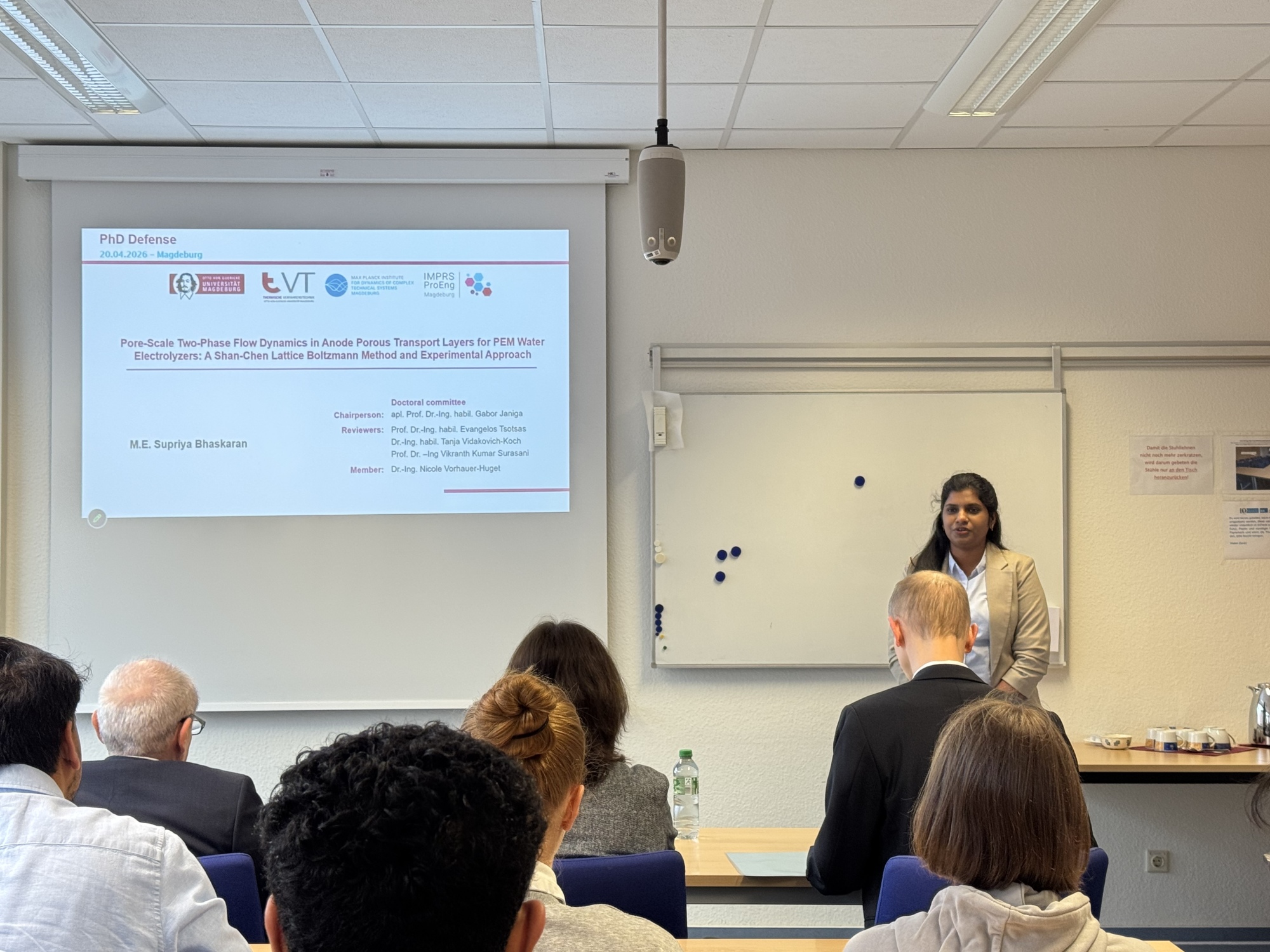
We are pleased to announce that Mrs. Supriya Bhaskaran, a former member of the TPM Research Group, has successfully defended her Ph.D. thesis on Pore-Scale Two-Phase Flow Dynamics in Anode Porous Transport Layers for PEM Water Electrolyzers: A Shan-Chen Lattice Boltzmann Method and Experimental Approach.
Her research was carried out at the TPM group and represents a valuable contribution to ongoing work in the field. The successful defense marks an important milestone in her academic career.
The entire team congratulates Dr.-Ing. Supriya on this achievement and wishes her continued success in all future endeavors.
Schülergruppe zu Besuch
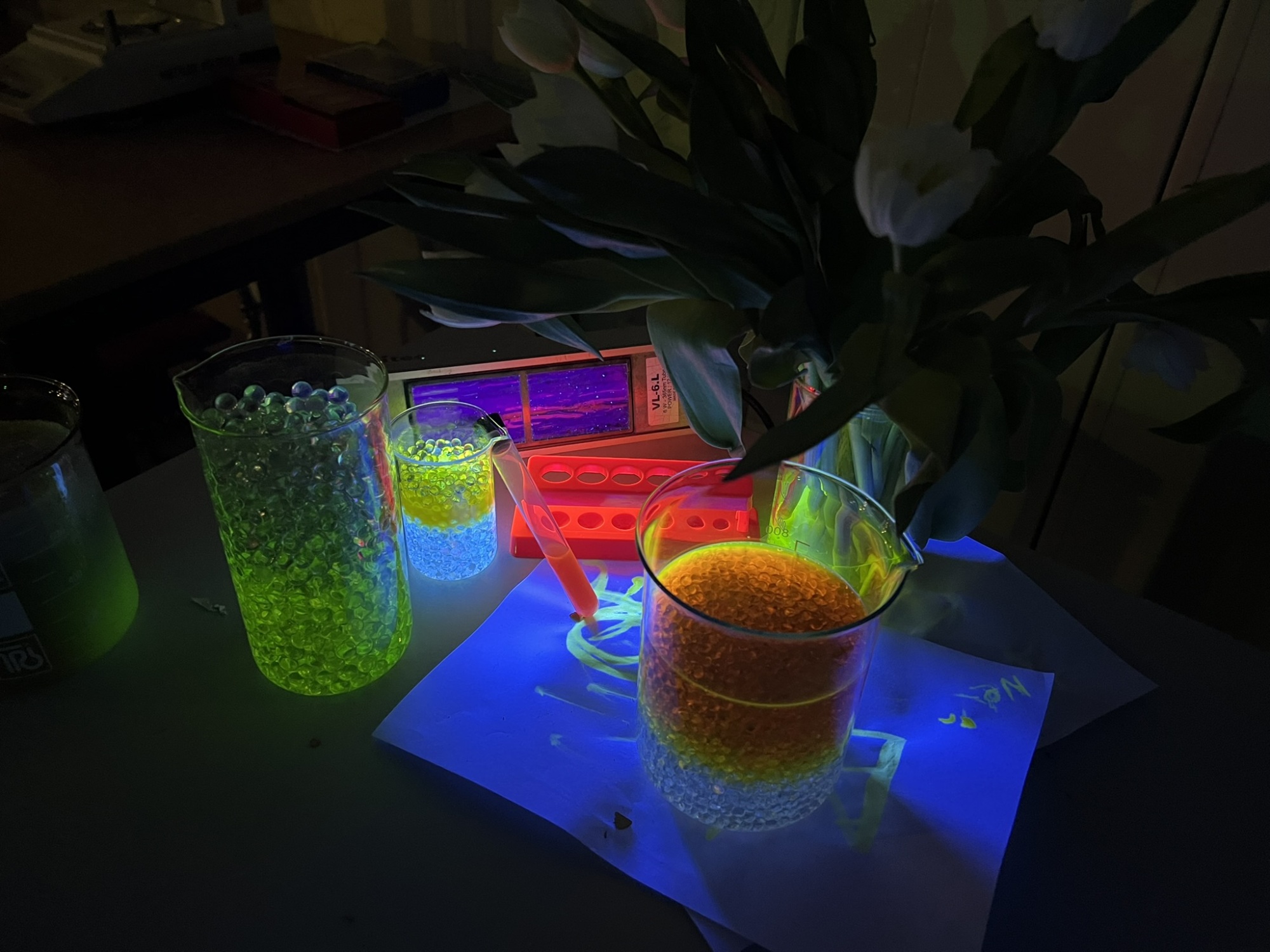
Ein bisschen "spukig" wurde es beim Besuch des Internationalen Stiftungsgymnasiums Magdeburg (ISG) und Gastschüler*innen aus Istanbul im Labor des CRC/TRR 287 BULK-REACTION an der Otto-von-Guericke-Universität Magdeburg: Im abgedunkelten Labor konnten die Besucher*innen mit Hilfe von fluoreszierenden Farbpigmenten erleben, wie sich Flüssigkeiten in Glaskugelschüttungen mischen und wie Pflanzen mit Hilfe von kapillarem Flüssigkeitstransport Wasser und darin dispergierte Substanzen aufnehmen.
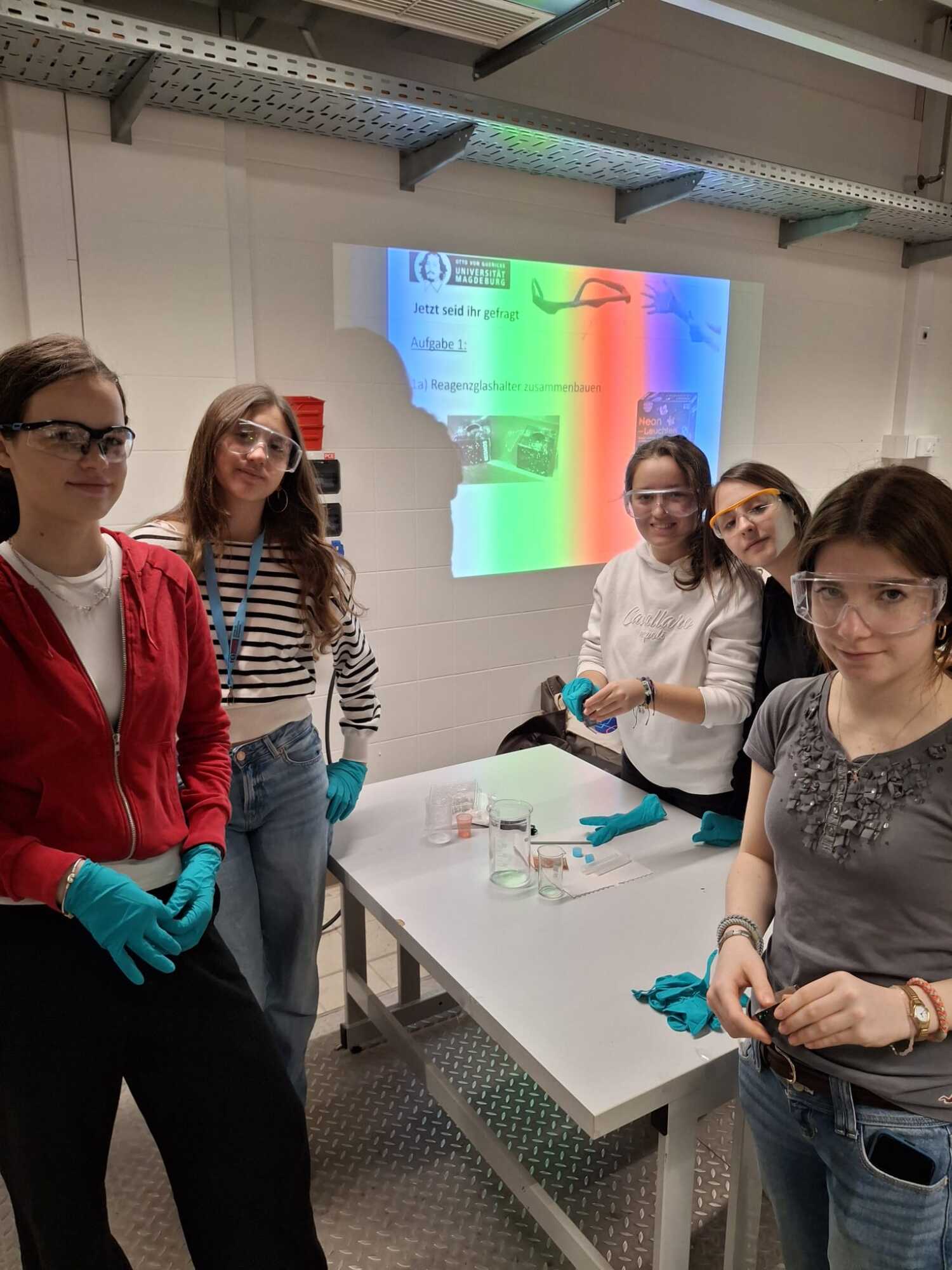
Begleitet von ihren Lehrer*innen Ayla Sahin aus Istanbul und Jorge Paredes konnten die Schüler*innen selbst fluoreszierende Suspensionen herstellen, Farben mischen und in Prozessen verarbeiten. Die entstandenen Bilder zeigen, dass Verfahrenstechnik auch künstlerische Elemente enthalten und sehr viel Spaß machen kann.
Erfolgreicher Auftakt des ersten nationalen Mikrowellenworkshops
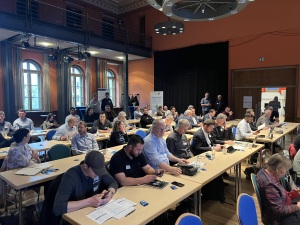
Mit mehr als 50 Teilnehmenden aus Industrie und Forschung war der erste gemeinsame Mikrowellenworkshop "Nutzung der Mikrowellenerwärmung in verfahrenstechnischen Prozessen" der Materialforschungs- und ‑prüfanstalt Weimar (MFPA) und der Otto-von-Guericke-Universität Magdeburg ein voller Erfolg.
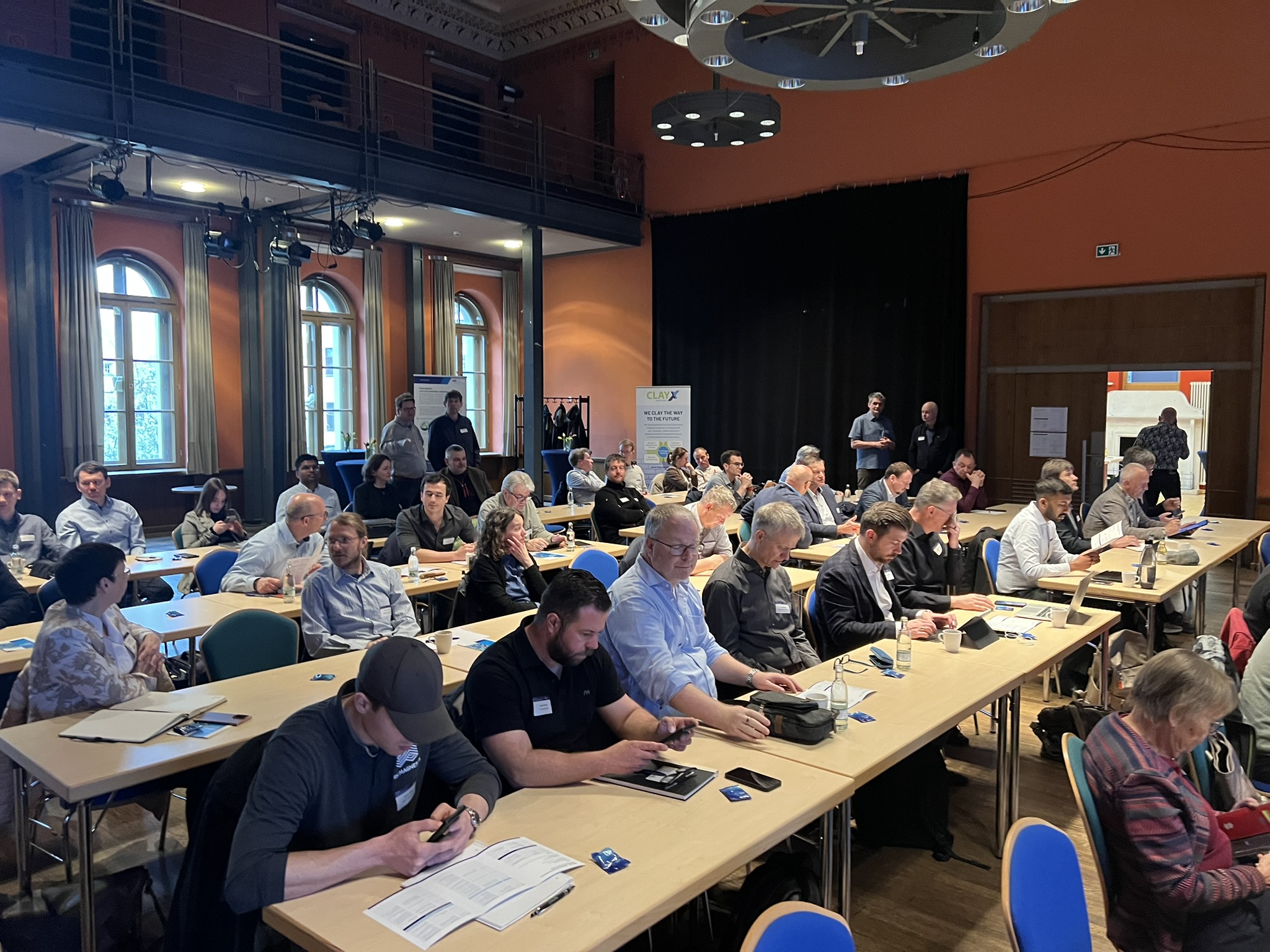
Das fachliche Programm deckte ein breites Spektrum aktueller Anwendungen und Forschungsansätze ab. Die Beiträge reichten von der Ziegeltrocknung und dem Mikrowellenbrand in der Grobkeramik über mikrowellengestütztes Vakuumtrocknen von Wärmedämmstoffen und die Mikrowellentrocknung von Feuerfestbauteilen bis hin zu plasmabeheiztem Glasschmelzen, Mikrowellenpyrolyse von Biomasse, Methanspaltung in mikrowellenbeheizten Wirbelschichten sowie Hopfentrocknung. Ergänzt wurde das Programm durch Vorträge zu Messtechnik zur Erfassung von Temperatur- und Zusammensetzungsunterschieden im elektromagnetischen Feld, zu Kaschiertechnik, Extrusion sowie zu Simulationsmöglichkeiten mikrowellenbasierter Prozesse.
Ein weiterer Schwerpunkt lag auf dem intensiven Austausch zu aktuellen Herausforderungen, industriellen Anwendungen und dem Bedarf zukünftiger technologischer Entwicklungen. Der Workshop bot hierfür eine geeignete Plattform und förderte den Dialog zwischen Forschungseinrichtungen und Industriepartnern.
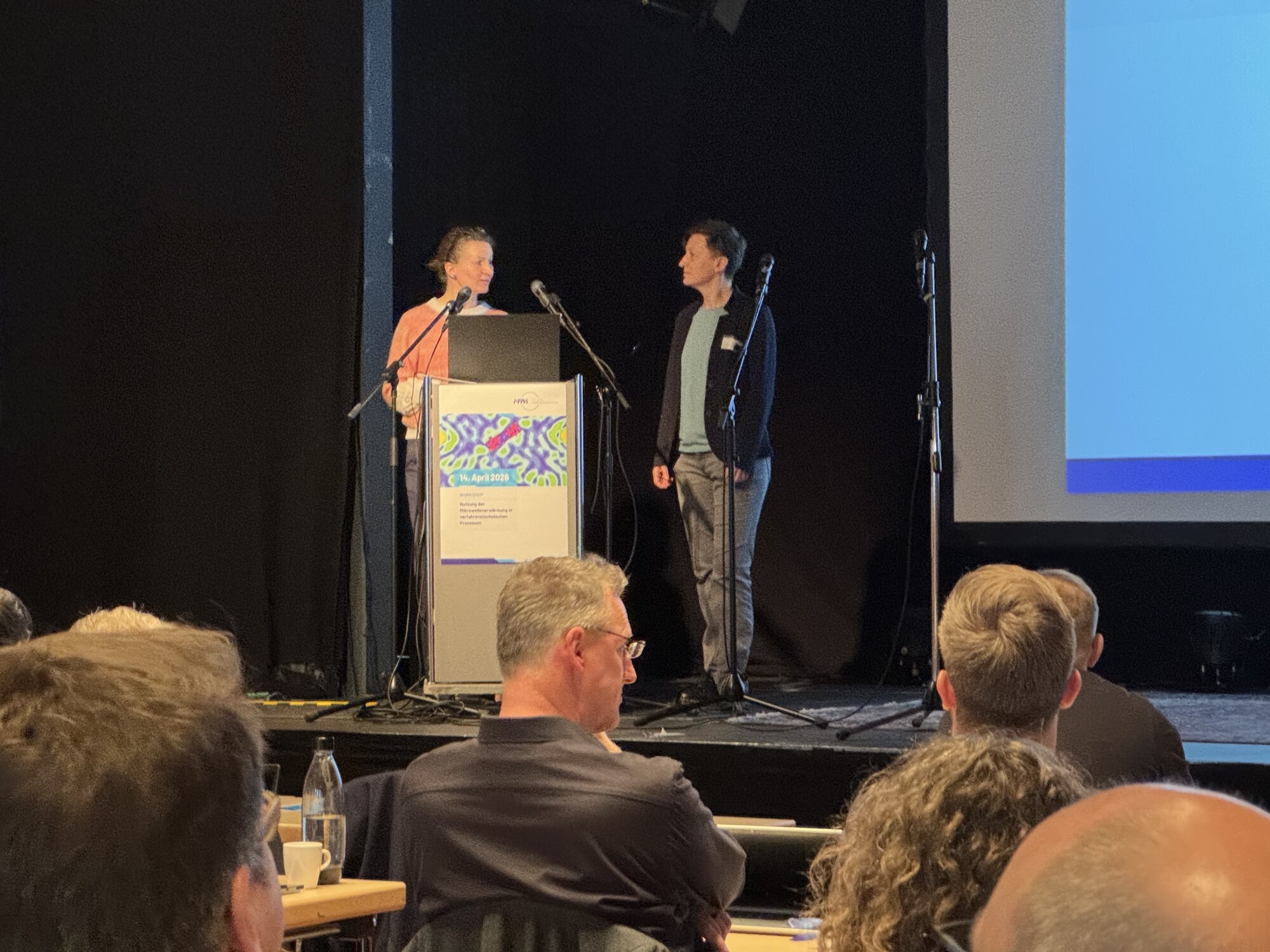 Ein besonderer Dank gilt dem Organisationsteam der MFPA Weimar, insbesondere Anne Tretau und Milena Deobald, für die hervorragende Durchführung der Veranstaltung. Ebenso danken wir den Keynote-Speakern Jörn Lidde (Püschner GmbH), Jan-David Griesche (K+S Gruppe) und Stefan Puskas (Wienerberger AG) für ihre fundierten Einblicke in den industriellen Stand der Technik.
Auch der Sonderforschungsbereich CRC/TRR 287 BULK-REACTION war mit drei Beiträgen vertreten:
- Dr. Andrea Dernbecher: Modellierungsansatz für elektromagnetisches Feld und Erwärmung in einem Mikrowellenreaktor mit OpenFOAM
- Javagar Mahendran: Charakterisierung dielektrischer Materialien mittels Millimeterwellenradar
- Felix Faber: Mikrowellenpyrolyse von Biomasse
Die Veranstalter freuen sich bereits auf eine Fortsetzung des Mikrowellenworkshops, die für April 2028 geplant ist.
New Publication: Assessment of non-isothermal pore network modeling of freeze-drying using 4D X-ray imaging
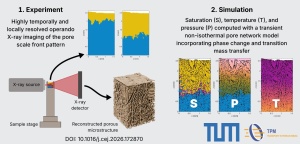
Felix Faber, Sebastian Gruber, Petra Först, Evangelos Tsotsas, Nicole Vorhauer-Huget. . Available at https://doi.org/10.1016/j.cej.2026.172870
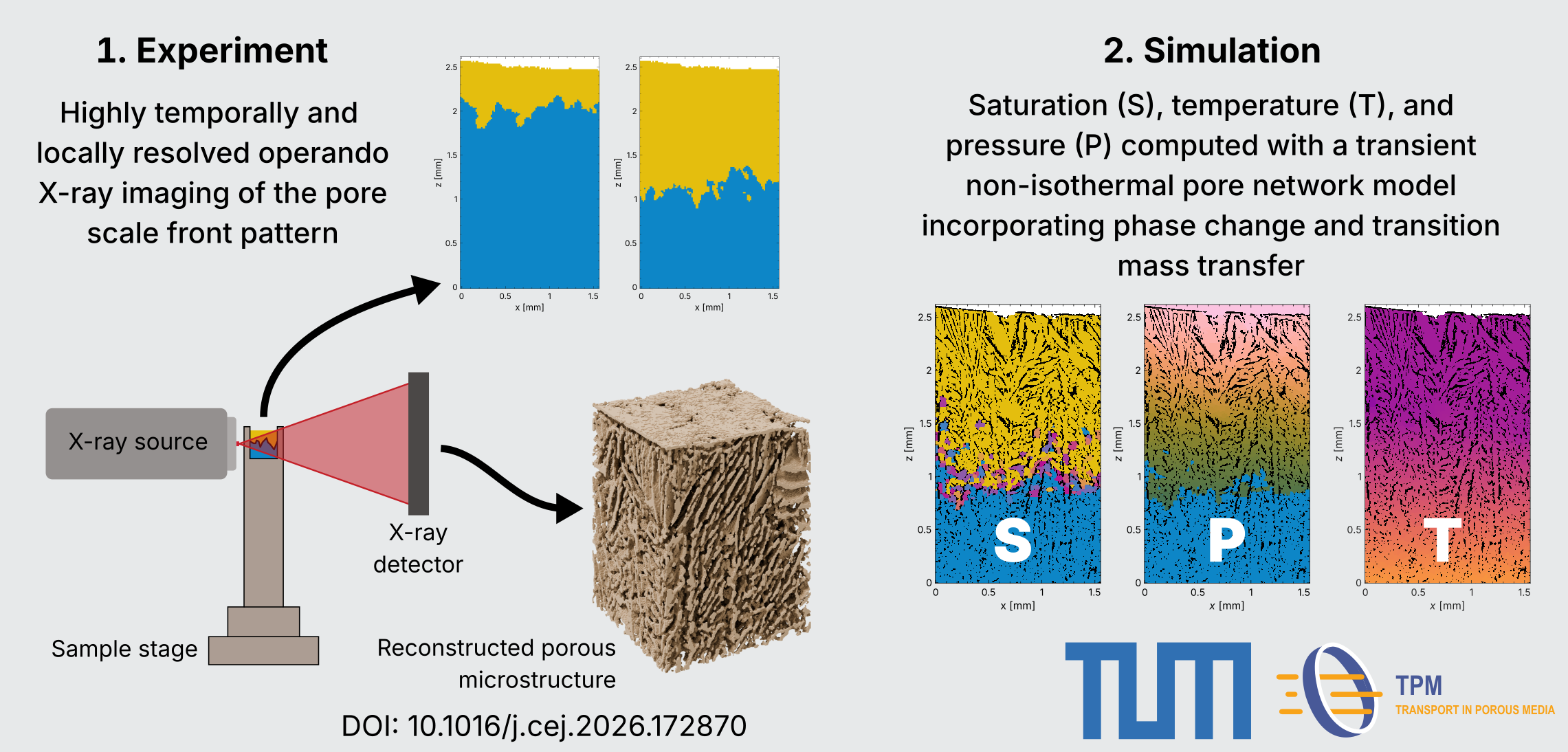
Freeze-drying (FD) is an important, but also expensive and slow conservation process for pharmaceuticals and foods. The interactions of coupled heat and mass transfer with the solid structure of the frozen product are complex and in most cases only addressed with macroscopic modeling approaches that heavily rely on averaged structural data. To enable a better physical understanding of primary FD, this work employs a non-isothermal pore network model (PNM) for primary FD together with empirical data obtained with 4D X-ray imaging. Drying of maltodextrin (5 % w/w solid content) is experimentally tracked with time- and space-resolved operando X-ray imaging. The porous structure of the very same sample is afterwards reconstructed for PNM simulations. As the size of the sample is much larger than the geometric peculiarities of the sublimation front, it is for the first time possible to study correlations between individual pore temperatures and pressures, pore-scale heat and mass transfer and evolution of the sublimation front inside the amorphous microstructure numerically, which is guided by results of the previous experimental 4D X-ray imaging of the FD process. Complementary to the experimental data, the time-dependent spatial temperature and pressure variations within the pore space are explored with the PNM approach. Given the sublimation front widening during the process, significant temperature and pressure differences within this region are demonstrated. Such information is generally not available from experimental measurements alone, and macroscopic mathematical models do not resolve the process sufficiently on the pore scale, which underscores the strengths of the PNM in this study.
Doctoral Defense of Mr. Haashir Altaf
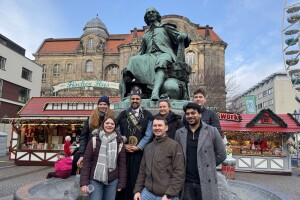
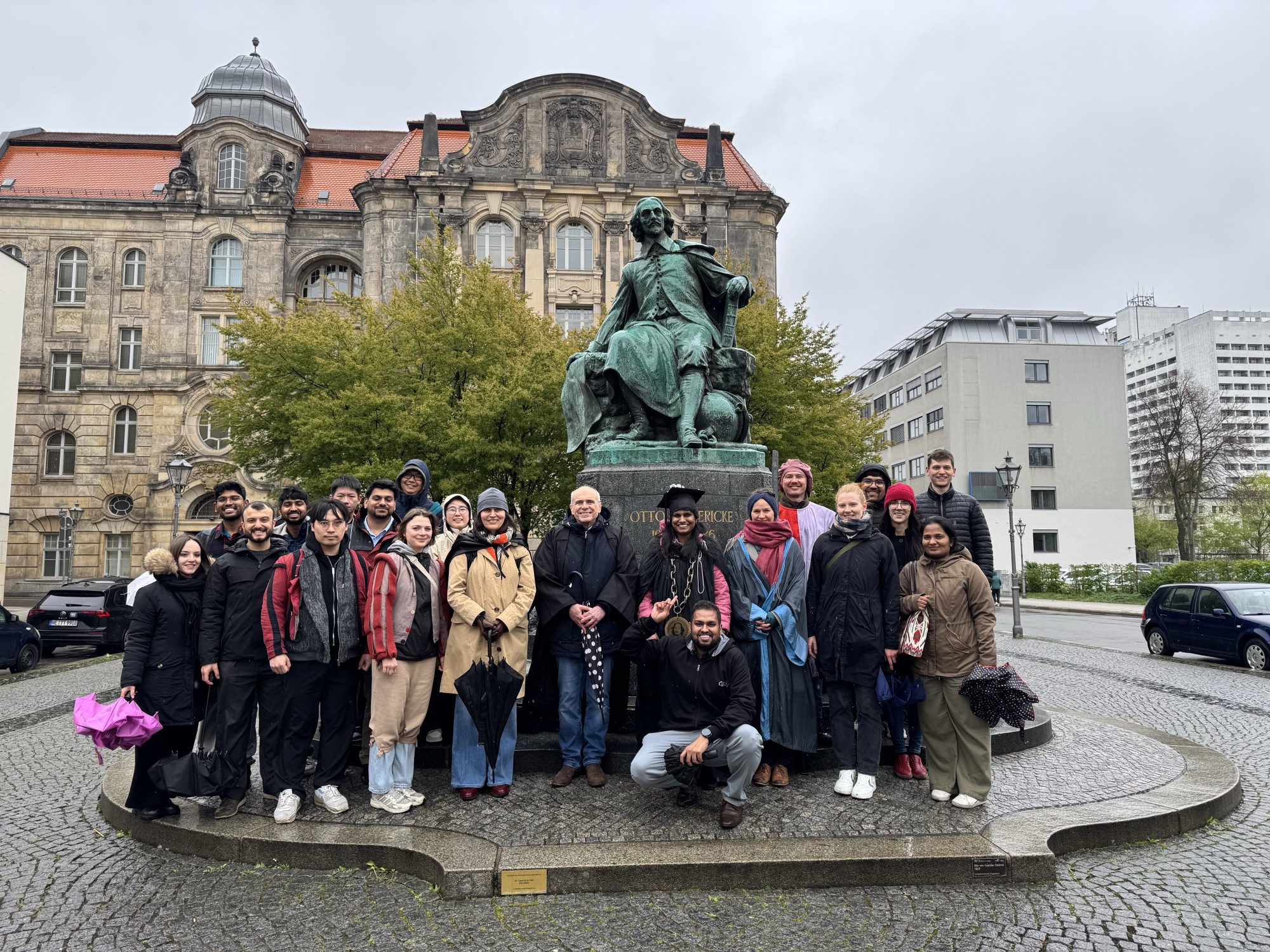
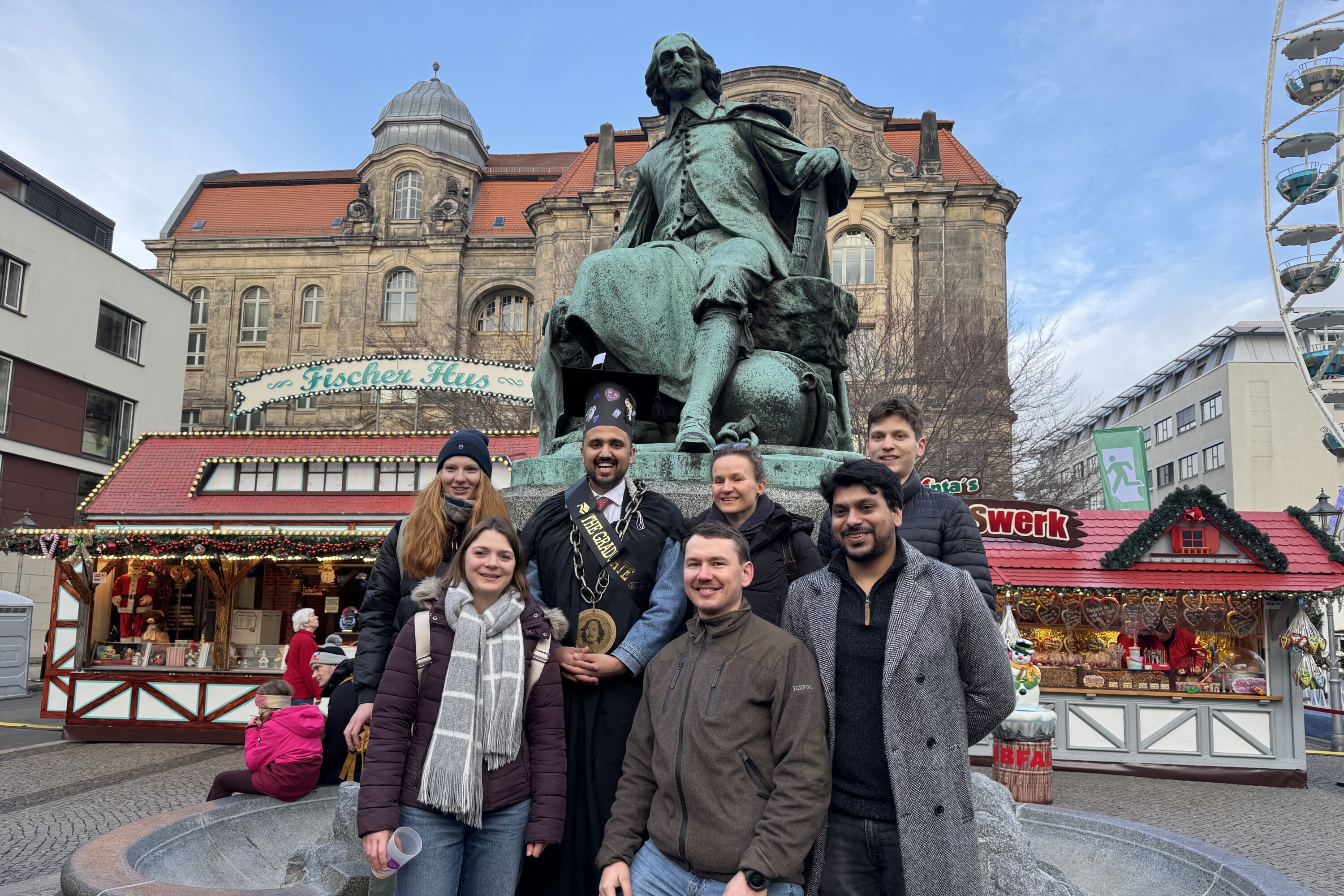
We are very happy to announce that Mr. Haashir Altaf has defended sucessfully his doctoral work on the topic "Pore Network Modeling and Neutron Imaging-Based Analysis of Transport in Fibrous Porous Transport Layers for PEM Electrolyzers" . Haashir is the first Ph.D. candidate from our TPM research group who will obtain his doctorate.
We hope that Haashir enjoyed the traditionall ride on the horse to the Otto statue at Alter Markt quite well. We wish Haashir and his family all the best for their future.
DECHEMA/VDI Promovierendenseminar 2025 Fachgruppe "Wärme- und Stoffübertragung" (WSUE)

Vom 26. - 28. November 2025 fand in diesem Jahr das Promovierendenseminar der DECHEMA/VDI Fachgruppe "Wärme- und Stoffübertragung" (WSUE) am Lehrstuhl für Thermische Verfahrenstechnik an der OVGU statt.
Neben kollegialen Austausch zwischen den Promovierenden, einem spannenden Vortrag zum Thema "Scientific Publishing in the AI age: are the “old” rules of good scientific practice still sufficient?", standen auch die fachlichen Themen im Vordergrund des Seminars, welche in kurzen Vorträgen präsentiert und anschließend diskutiert wurden.
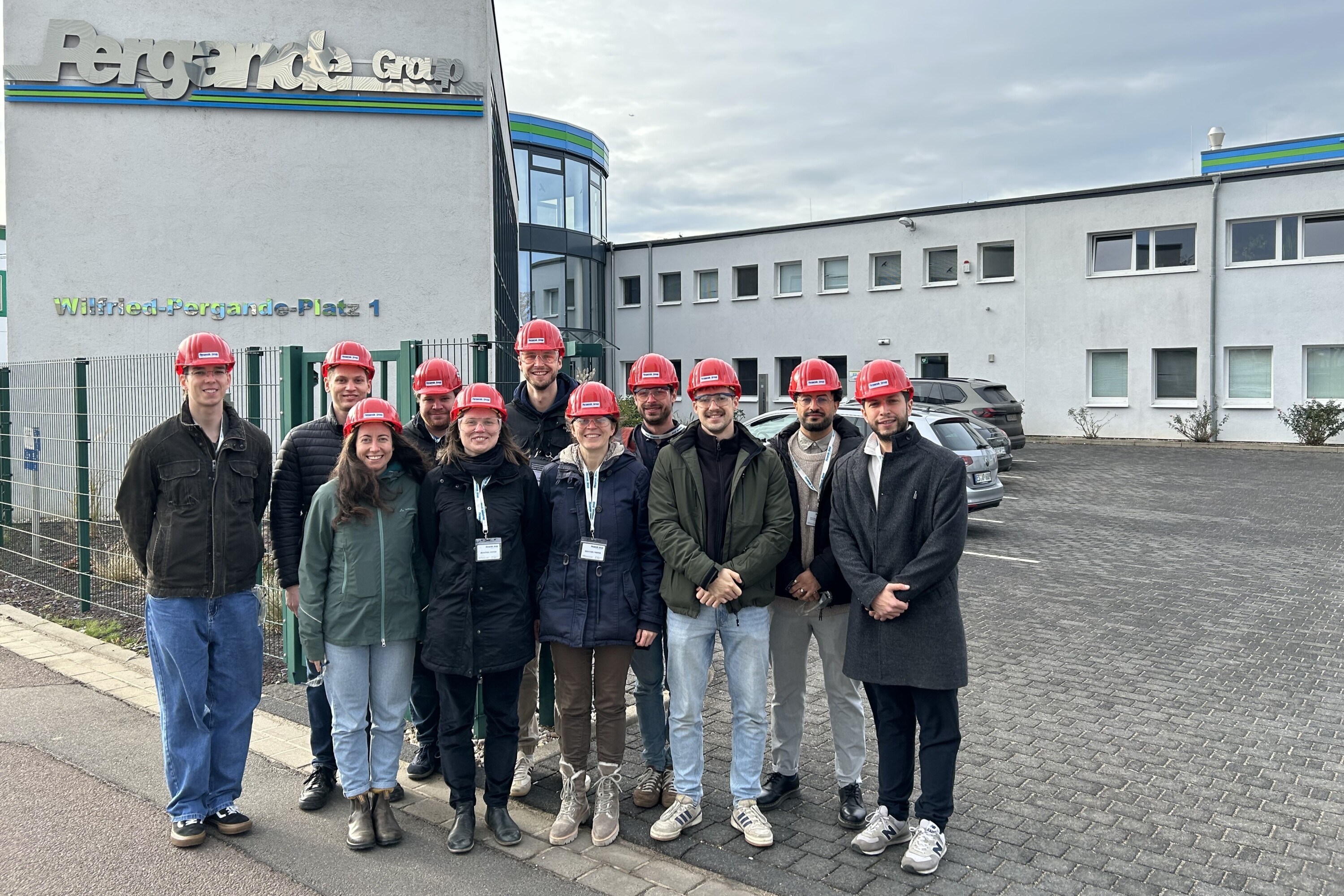
Zum Abschluss wurde das Seminar mit einer spannenden Werksbesichtigung in der Industrie bei der Pergande Group in Weißandt-Gölzau abgerundet. Hier gab es tolle Einblicke in die industrielle Formulierung von Feststoffprodukten mit der Wirbelschichtgranulation.