
News
Doctoral Defense of Mr. Simson Julian Rodrigues
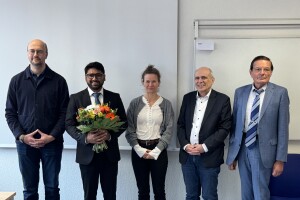
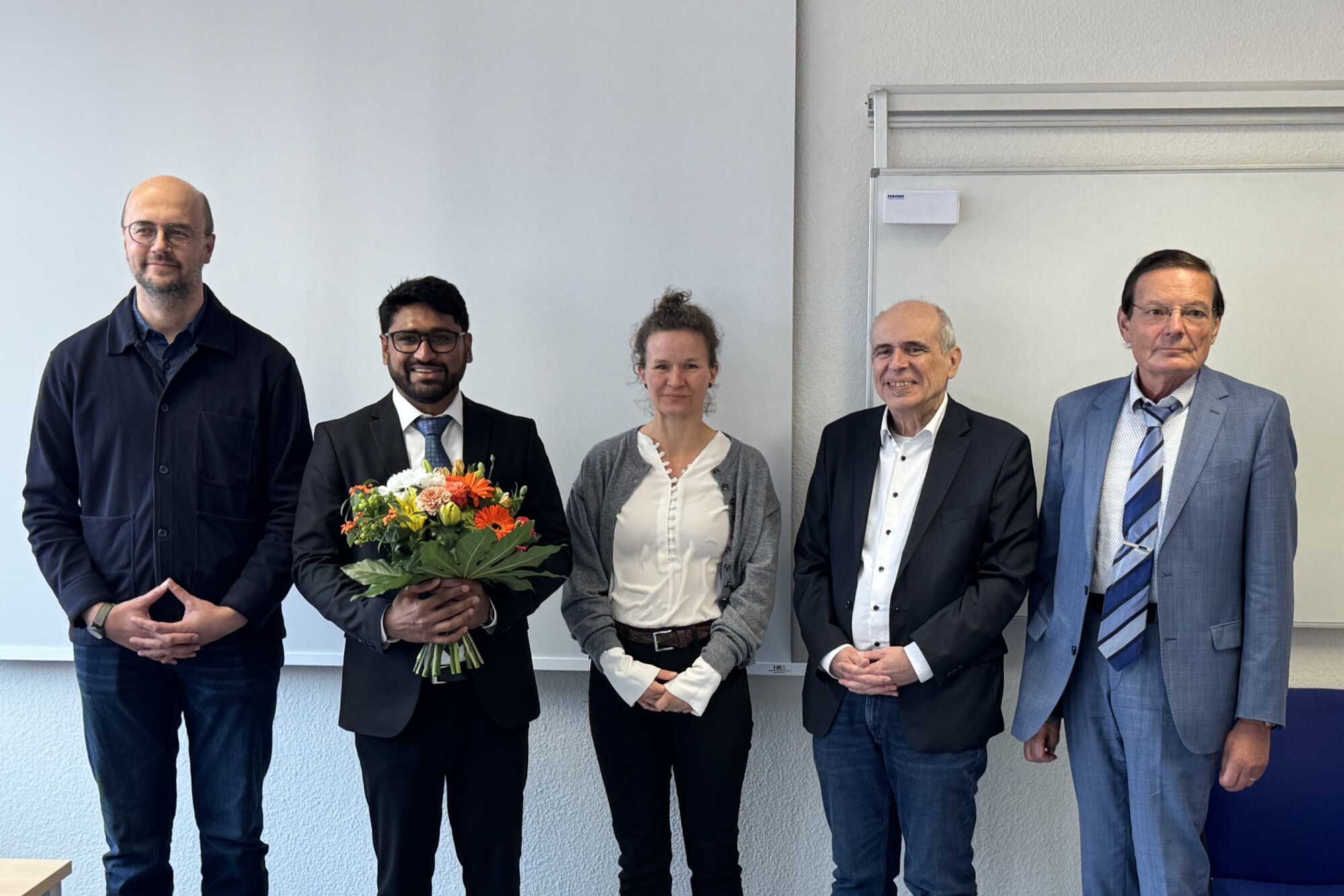
We are pleased to announce that Mr. Simson Julian Rodrigues successfully defended his Ph.D. thesis on Particle-Particle Contact Heat Transfer and Heat Conduction in packed beds of Polyhedral Particles on October 12th 2026.
Packed beds are everywhere in process engineering, from catalytic reactors and adsorbers to dryers and pyrolysis units, and the way heat moves through them largely decides how these apparatuses perform. Most established models, however, were developed for beds of spheres, while many real materials consist of edged, polyhedral particles. Simson’s work addressed this gap. Combining experiments, X-ray micro-computed tomography and numerical simulations of beds made of cubes and other polyhedra, he studied how particle shape affects bed structure, tortuosity and effective thermal conductivity. His results include a tortuosity model based on particle sphericity and bed porosity, improved predictions of the effective thermal conductivity of polyhedral particle beds, and a detailed analysis of local structural and thermal variability inside such beds. Together, they help put thermal simulations of non-spherical particles, for example with the discrete element method, on a sound basis.
His research was carried out at the Chair of Thermal Process Engineering under the supervision of Prof. Evangelos Tsotsas, in close cooperation with the TPM group.
The entire team congratulates Dr.-Ing. Simson Julian Rodrigues on this achievement and wishes him all the best for the future!
Student excursion to Dow in Schkopau
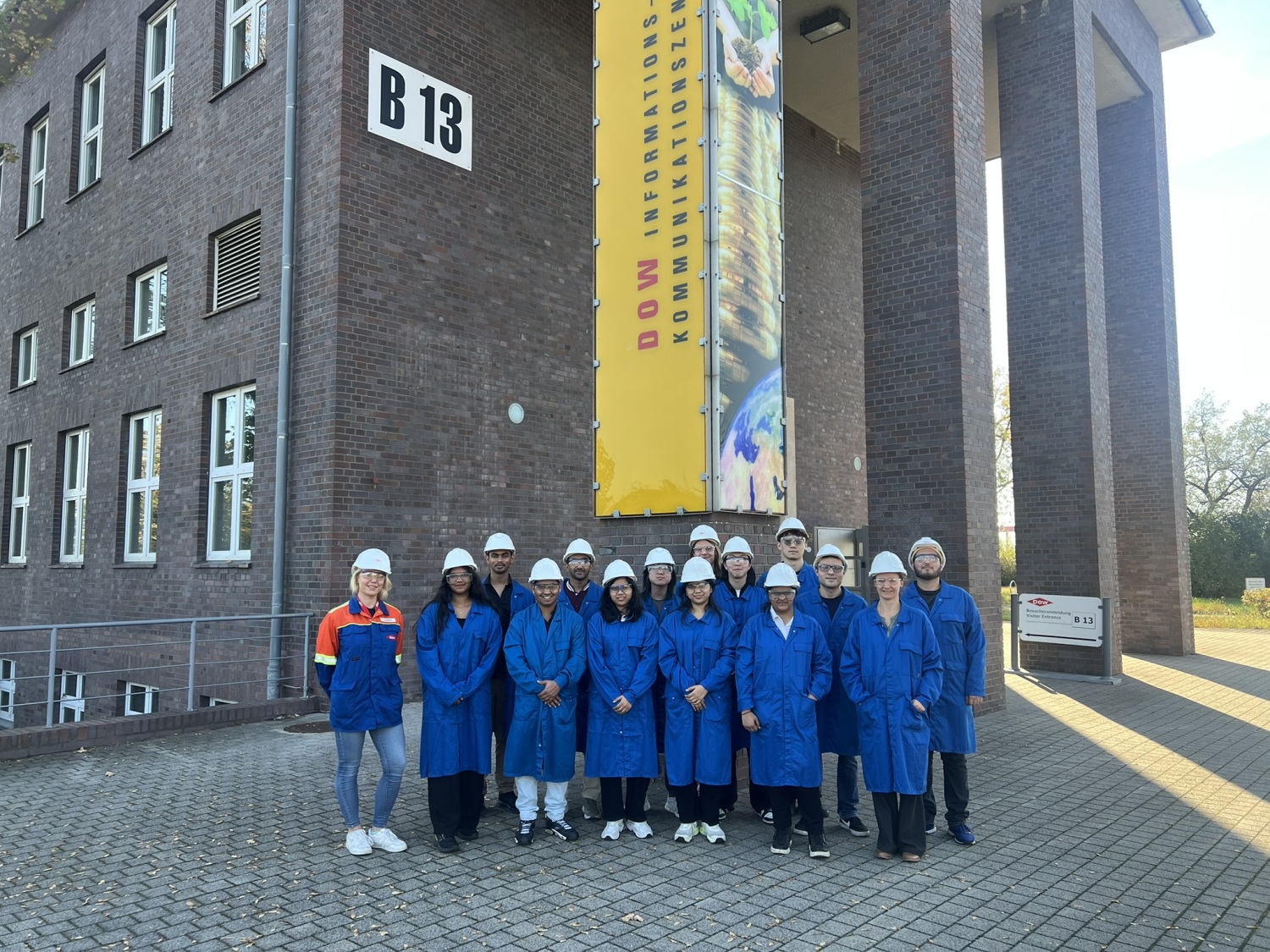
On 6 October 2026, 13 students visited the Dow site in Schkopau, in the heart of Saxony-Anhalt’s chemical triangle. They came from three OVGU programmes: Chemical and Energy Engineering, Process Safety and Environmental Engineering, and Nachhaltige Verfahrens- und Umwelttechnik.
Dow is one of the world’s largest chemical companies. Its basic chemicals, plastics and specialty chemicals end up in almost everything we use every day, from cosmetics and packaging to furniture and paints.
In perfect weather, Franziska Witaßek and her colleagues guided the group across the 600-hectare site. Beyond the processes themselves, the students learned what it takes to produce on an industrial scale: how energy is generated and supplied, how wastewater is treated, and what role sustainability plays in day-to-day operations. The most impressive moment was seeing polyethylene produced by the tonne, though from a safe and respectful distance.
Many thanks to Franziska Witaßek and her colleagues at Dow for the interesting tour and for giving our students such a close look at industrial-scale process engineering.
Beech wood study featured on the cover of Energy & Fuels
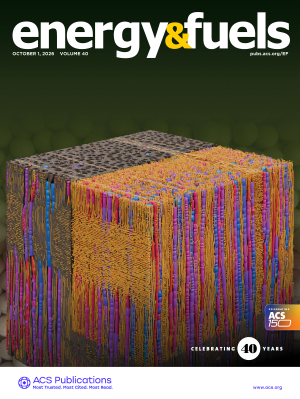
Our article on anisotropic gas transport in beech wood has been selected as the cover of Energy & Fuels, Volume 40, Issue 39.
How gas moves through a wood particle strongly affects what happens inside it during thermochemical conversion such as pyrolysis. Wood, however, is anything but uniform: vessels and fibers form a hierarchical pore structure with a strong preferred direction. In the study, beech wood (Fagus sylvatica) was imaged by high-resolution X-ray micro-computed tomography before and after stepwise pyrolysis up to 500 °C. Pore networks extracted from the reconstructed 3D structures were then used to compute permeability tensors in the longitudinal, radial and tangential directions.

The results show how pronounced this anisotropy is. In native wood, gas flows almost entirely through the large longitudinal vessels, while transport across the grain is negligible. As pyrolysis proceeds, the pore space becomes far better connected in the radial and tangential directions, raising transverse permeability by up to two orders of magnitude, while longitudinal permeability stays at around 10⁻¹¹ m². A comparison with pore-resolved CFD simulations yielded direction-dependent correction factors for the pore network model, bringing the two approaches into very good agreement. The work establishes pore network modeling as an efficient tool for describing anisotropic gas transport in wood and provides input for particle-scale models of biomass pyrolysis.
The cover shows a pore network model extracted from the wood microstructure: wide vessel elements (magenta, purple, and blue) run axially through a dense mesh of narrow fibers (orange and yellow), with the surrounding cell wall shown in brown. Pore bodies and throats are scaled to their equivalent radii, making the strong anisotropy that governs flow along and across the grain directly visible. It was rendered with PoreScene, a Python tool developed by our Ph.D. student Felix Faber that uses Blender to create 3D visualizations of pore networks.
Publication:
Faber, F., Dernbecher, A., Gruber, S., Foerst, P., Dieguez-Alonso, A., & Vorhauer-Huget, N. (2026). Anisotropic Gas Permeability of Beech Wood from X-ray Microtomography and Pore Network Modeling: The Role of Vessels, Fibers, and Pyrolytic Conversion. Energy & Fuels, 40(39), 21866–21881. https://doi.org/10.1021/acs.energyfuels.6c03101
Group trip to the Harz
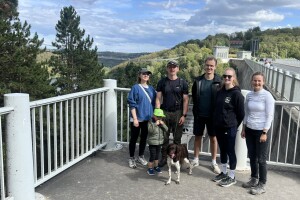
In August the Transport in Porous Media group swapped the lab for the Harz mountains. Starting at Schieferberg near Oberharz am Brocken, we walked the eleven-kilometer round above the Rappbode and Wendefurth reservoirs: 220 metres of ascent, a good three hours of walking.
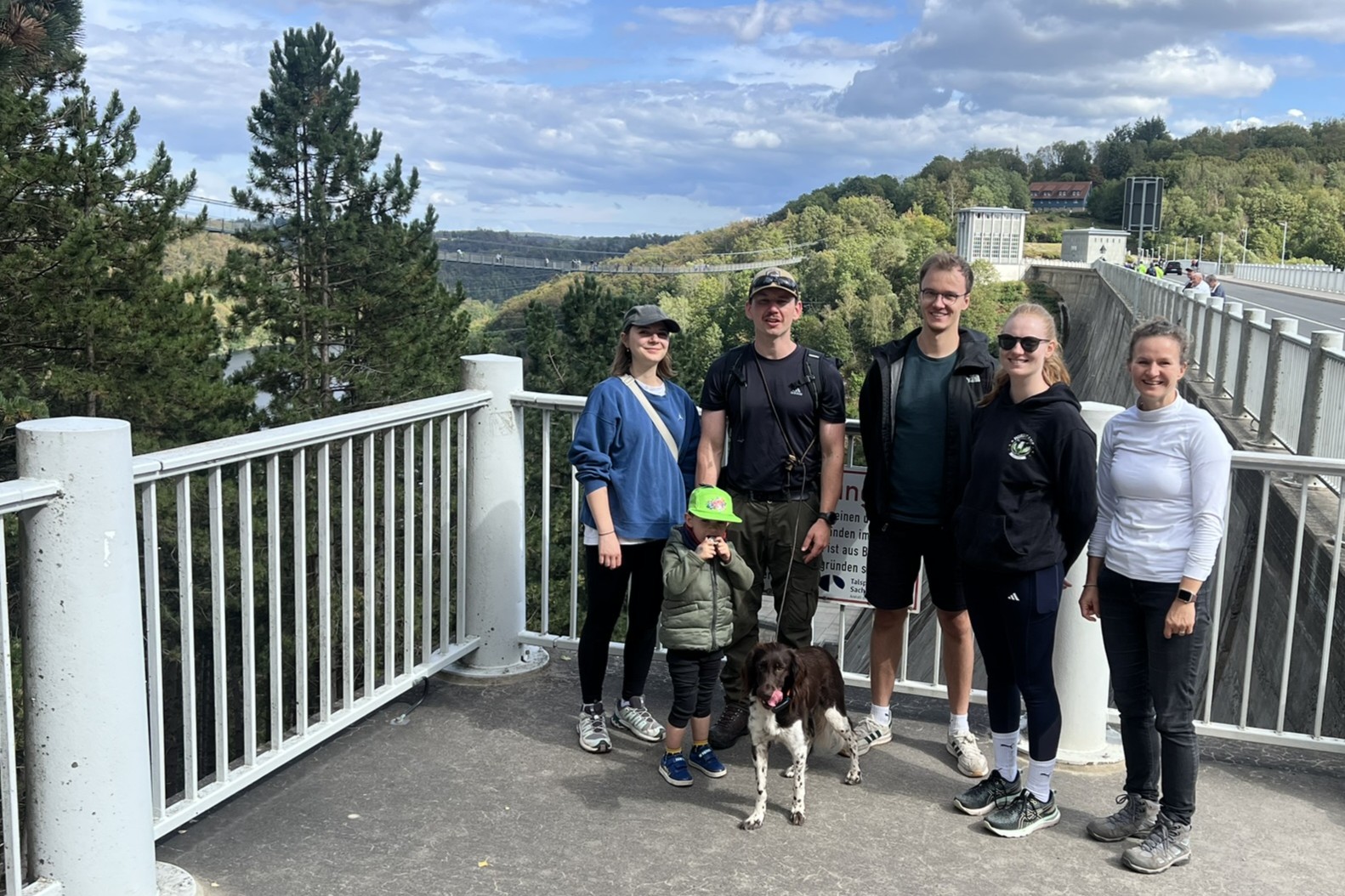
The route follows part of the Harzer-Hexen-Stieg through the forest and opens again and again onto the water. Two landmarks stand out. The Rappbode dam wall, at 106 metres the highest in Germany, holds back the reservoir that supplies drinking water to much of the region. And the Titan RT suspension bridge, 483 metres long and hanging some 100 metres above the valley floor, was crossed by parts of the group with noticeably more enthusiasm than by others. From the Schöneburg shelter the view drops away into the Bode valley.
There was a certain thematic fit to the day. Our work is concerned with how fluids move through porous structures, and the Harz has been managing exactly that at landscape scale for centuries: rain infiltrating forest soil, percolating through fractured rock, collected in ponds and ditches by generations of miners, and finally stored behind a concrete wall.
VDI Magdeburg Award Ceremony 2026: Award for Mr. Lucas Kleine
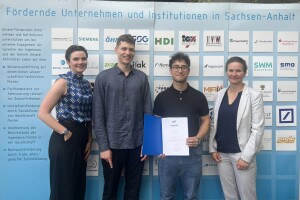
At a ceremonial event held last week at the Grusonsche Gewächshäuser, the Magdeburg District Association of the Verein Deutscher Ingenieure (VDI) presented its annual sponsorship awards. Among the distinguished young researchers was Mr. Lucas Kleine, a student from our Transport in Porous Media (TPM) research group.
The VDI Sponsorship Award is one of the most established honors for young engineers and scientists in the region. Each year, it recognizes outstanding theses and research achievements in engineering and the natural sciences.
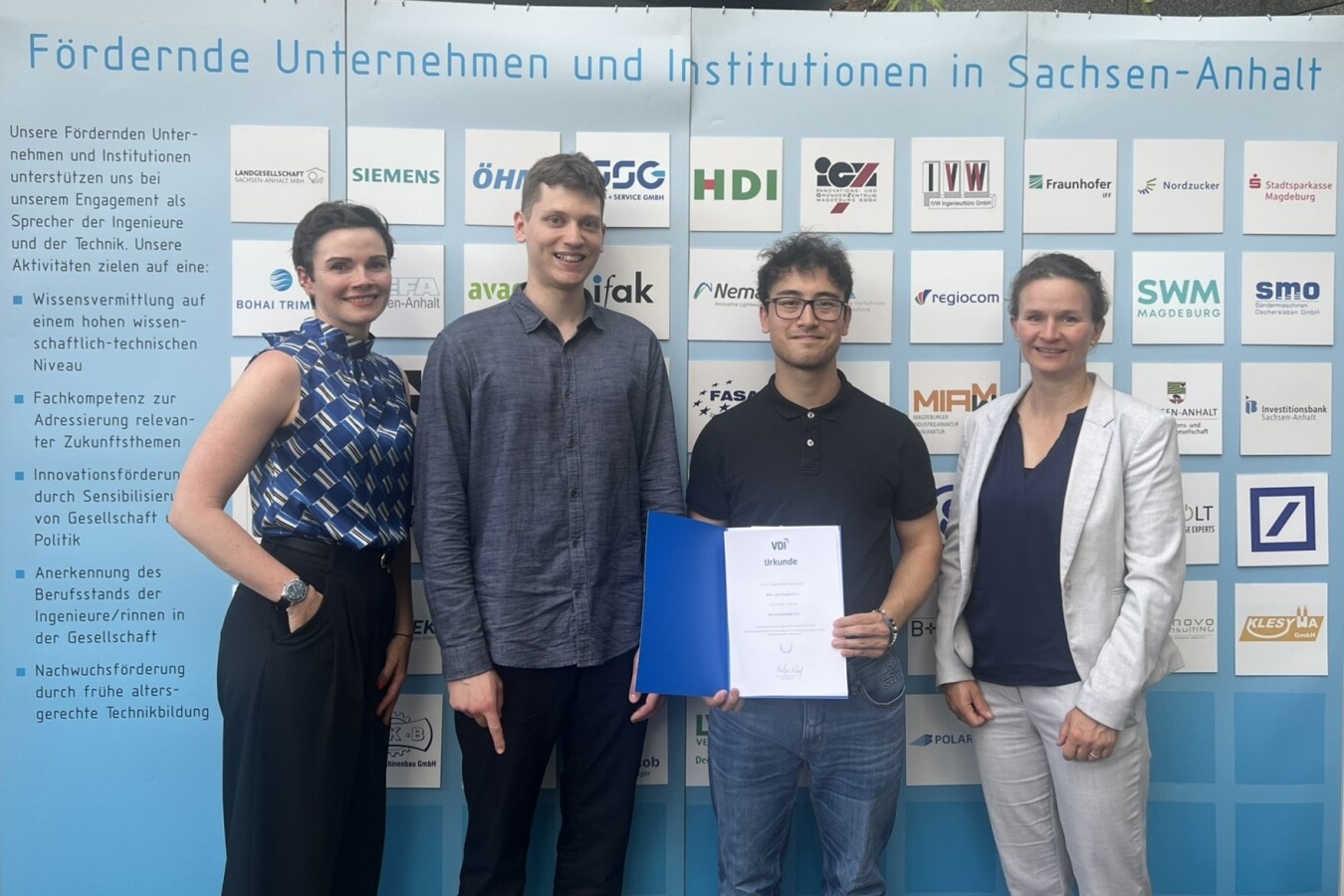
With the award presented to Lucas Kleine, another young researcher from the field of Thermal Process Engineering at OVGU has been recognized for his Bachelor thesis about "Investigation of the Influence of Process Parameters on the Pyrolysis of Biomass in a Microwave-Heated Fixed-Bed Reactor". His work was supervised by Ph.D. student Felix Faber and group leader Dr.-Ing. Nicole Vorhauer-Huget.
We warmly congratulate Lucas Kleine on this achievement and wish him all the best for his next steps!
Visiting Kyushu University in Japan
Our group leader Nicole Vorhauer-Huget visited togeather with Ph.D. student Felix Faber and Prof. Petra Foerst from Technische Universität München Prof. Kyuya Nakagawa at Kyushu University (Japan) for an inspiring exchange on freeze-drying technologies and current research developments.
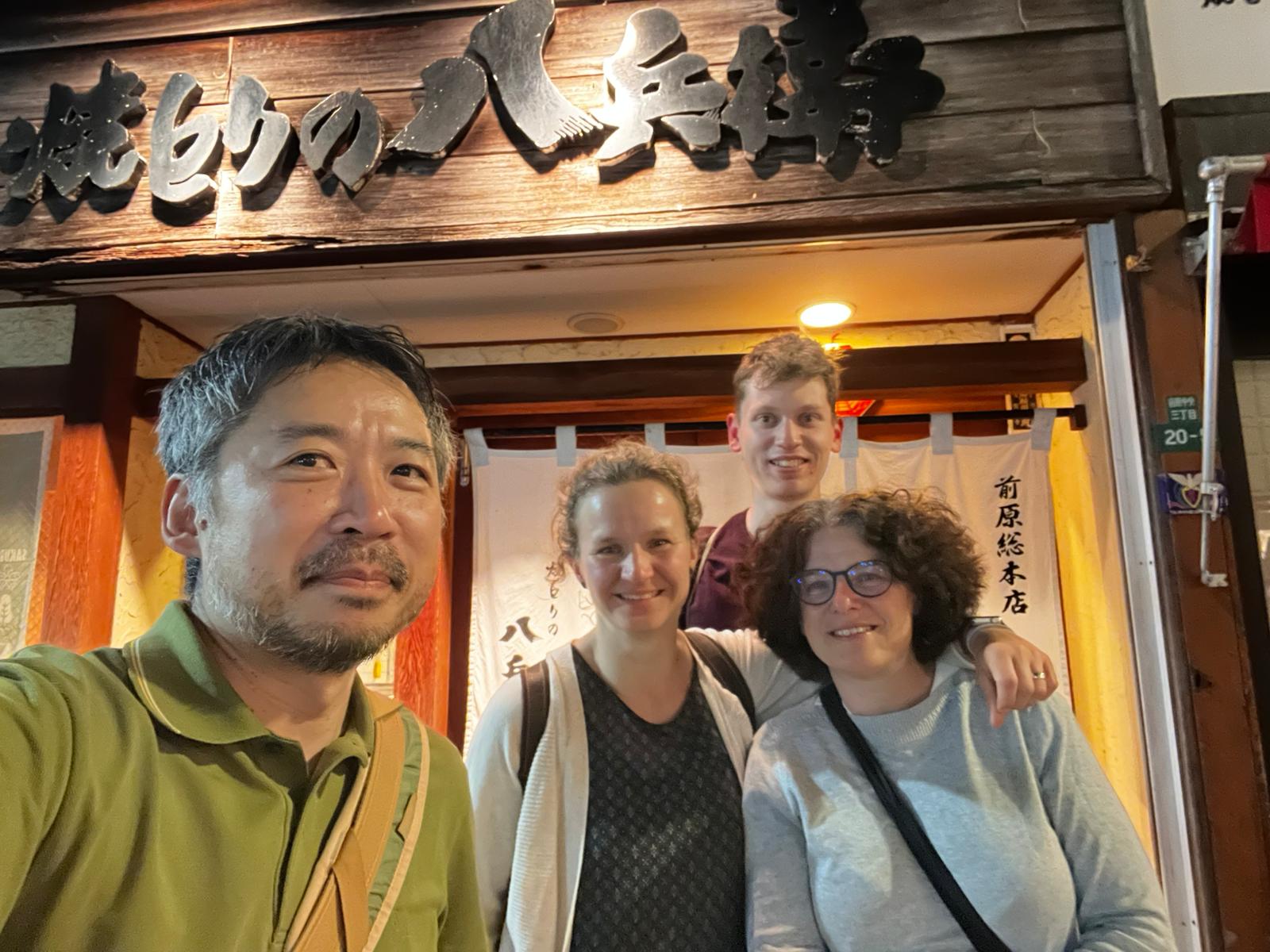
The visit provided an excellent opportunity to discuss scientific approaches, laboratory methods, and future perspectives in the field of lyophilization. Productive conversations and the exchange of ideas across institutions are essential for advancing innovation in chemical and process engineering.
We look forward to continuing the collaboration and strengthening international connections in research and education.